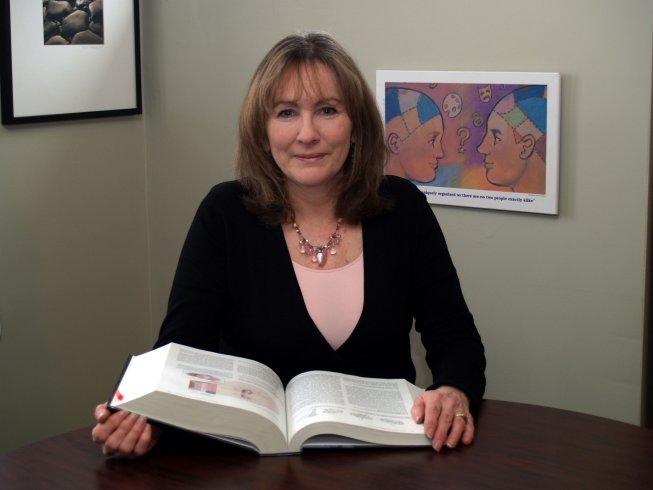
For over three decades, I have worked in education supporting students with diverse learning needs and helping schools become more inclusive. As a senior leader in an Australian school system, I’ve seen the best of what traditional education can offer. But I’ve also seen its limits: especially for students who try their hardest yet continue to fall behind.
I never expected those limits would hit so close to home.
My son Robert struggled from the time he was a toddler. Diagnosed with a receptive language disorder, he had difficulty processing even simple instructions. As he progressed through school, his challenges multiplied. Reading, writing, memory, organization - everyday tasks became exhausting. Despite his intelligence, he couldn't keep up, and by Year 9, he was defeated. He believed he was stupid. He was withdrawing, anxious, and ready to give up on school altogether.
As a mother and an educator, this was agonizing. I had access to every available support, yet nothing addressed the root cause. Everything we tried was about helping him cope—not helping him change. And that’s where I began to question: What if we’re not asking the right questions about learning difficulty?
I began researching a program I had heard whispers about: one that didn’t just accommodate learning difficulties, but aimed to strengthen the brain itself. That program was Arrowsmith.
The approach wasn’t new. It had been used in Canadian and U.S. schools for years. But its core premise was radical in the context of traditional education: that specific learning difficulties could be improved by strengthening the underlying cognitive functions causing them.
I approached the program as I do all things professionally—with scrutiny. I spent two years reviewing the research, meeting with educators, and learning about the methodology. I visited schools. I spoke with students. I examined outcome data, including studies showing statistically significant gains in cognitive and academic performance, reductions in mental health issues, and improved independence and quality of life. Research has continued since my own investigation, and is available today, including findings from multiple independent researchers from studies across Canada, the U.S., Spain, and Australia (arrowsmith.ca/research).
What I saw made sense: not just scientifically, but humanly.
And so, in what was both a professional pivot and a deeply personal act of hope, I packed up our life and took Robert to Canada to attend a school that offered Arrowsmith.
The shift was not instant, but it was steady - and unmistakable. Within weeks, Robert was engaging in ways I hadn’t seen in years. He was less anxious. More confident. His memory, reasoning, and comprehension improved. And so did his sense of self. One small moment stands out: I asked him to put on the kettle. He brought me a cup of tea - something so ordinary, but previously unachievable due to processing gaps. That moment told me his brain was beginning to work differently.
We returned home that July, and our friends saw it too. “He’s not the same child,” they said. And they were right. He was a young man stepping into himself for the first time.
Today, 10 years on, Robert is a post-secondary graduate. He is thriving: independent, confident, and full of purpose. He has built a life of his own design, and I am endlessly proud.
I know without a doubt that this outcome was not inevitable. It was made possible by a lens that looked beneath behaviour, beneath performance, and into the cognitive why.
A neuroplastic approach rewired more than my son’s brain, and it rewired my professional convictions. I still believe in inclusive education. I still believe in great teachers and the power of compassion. But I now also believe firmly in the importance of understanding the brain’s role in learning, and in building cognitive capacity, not just coping strategies. I also believe we need to keep asking ourselves: Are we doing everything we can? Are we prepared to evolve?
I understand why people are skeptical. New ideas in education always meet resistance, and this approach is different from what many of us were trained to do. But as someone who has both reviewed the research and witnessed the results firsthand, I believe it deserves serious consideration.
While my story is personal, it is not unique. Every week, I hear from parents who are searching, aching, advocating. I hear from teachers who know something’s missing. And I hear from young people who just want to learn without pain.
We need more than good intentions. We need to evolve the system.
Families should not have to leave their country to access interventions grounded in neuroscience. Educators should not have to feel helpless in the face of persistent struggle. And students—bright, hard-working students—should not be made to feel like the problem lies with them.
For years as an educator, I had focused on supporting students through what is. Now I see the importance of addressing why a student struggles in the first place. A cognitive lens doesn’t replace good teaching or strong relationship, but it does add something we’ve been missing.
For my son, for my family, and for the many others walking this path: I’m grateful we found another way forward. No child should be made to feel broken simply because we haven't known how to help them.


.svg)